Manufacturing Capabilities
What Stech PCB builds, in technical depth.
Ten board technologies. The four below get full detail; the rest are one click away -- every one of them is a real, confirmed capability, not a marketing category.
Primary Capabilities
The technologies that carry the most engineering depth
Multilayer, HDI, rigid-flex and high-complexity builds -- where the manufacturing decisions matter most before fabrication starts.
 01 / PRIMARY
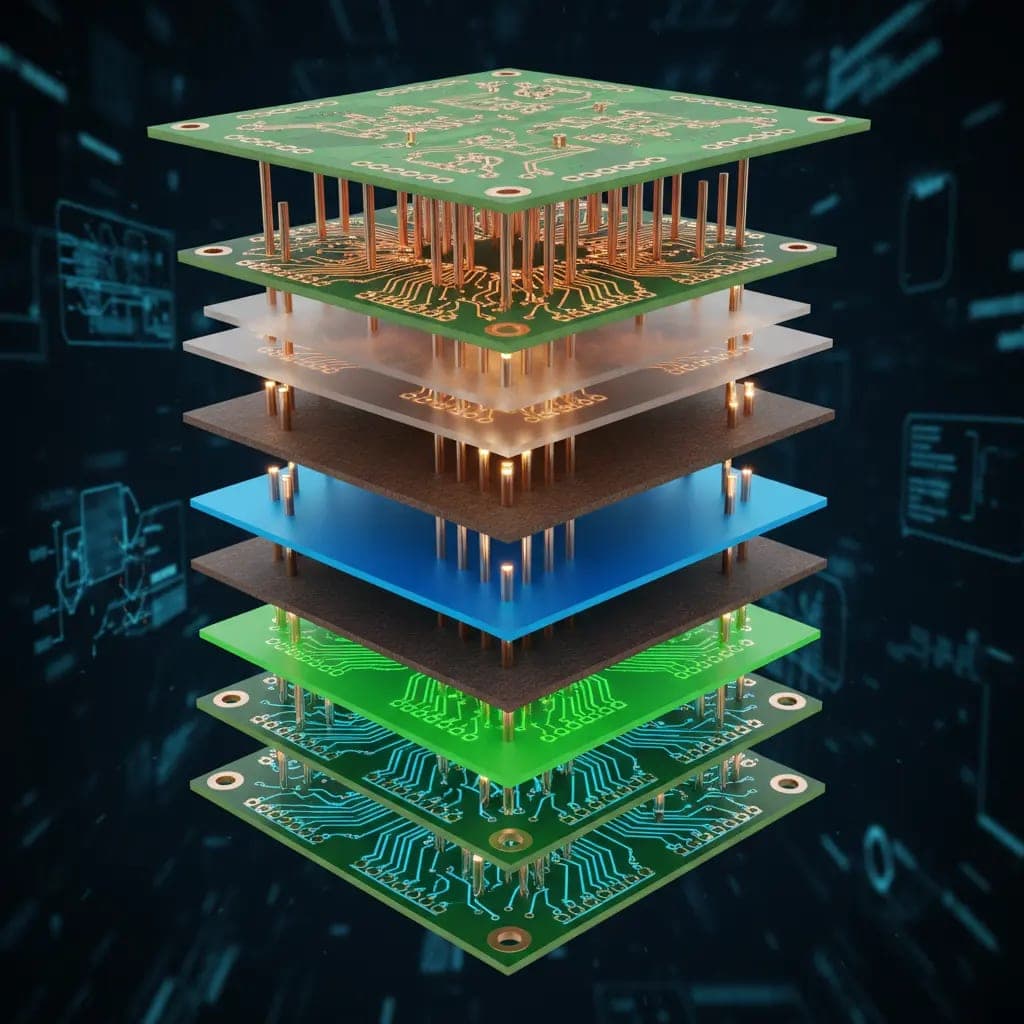
Multilayer PCB
Three or more conductive layers laminated together, separating power, ground, and signal routing across dedicated planes.
Why it matters
Dense designs need more routing area than a single board surface can provide, and dedicated ground and power planes improve signal integrity and reduce noise.
Typical applications
- Industrial control systems
- Compute and networking hardware
- Automotive electronic control units
- Dense mixed-signal designs
Technical considerations
- Layer stack-up sequencing affects impedance control and manufacturability
- More layers generally mean tighter lamination tolerances
- Via structures -- through, blind, buried -- need to be planned alongside the stack-up, not after
 02 / PRIMARY
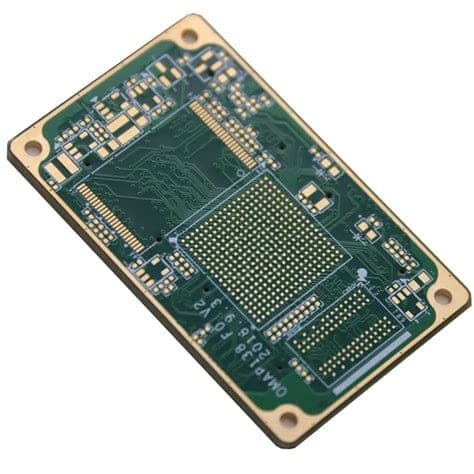
HDI PCB
High-Density Interconnect boards use laser-drilled microvias and fine-pitch traces to pack more routing into less board area.
Why it matters
As components shrink and pin counts rise, standard drilling and trace widths run out of room. HDI routes fine-pitch BGAs and dense connectors without expanding the board footprint.
Typical applications
- Smartphones and wearables
- Compact medical devices
- High-density compute modules
- Space-constrained sensor packages
Technical considerations
- Microvia aspect ratios and stacking (via-in-pad, stacked vias) affect both cost and reliability
- Fine-pitch traces require tighter process control during etching
- Sequential lamination adds manufacturing steps compared to a single-press multilayer board
 03 / PRIMARY
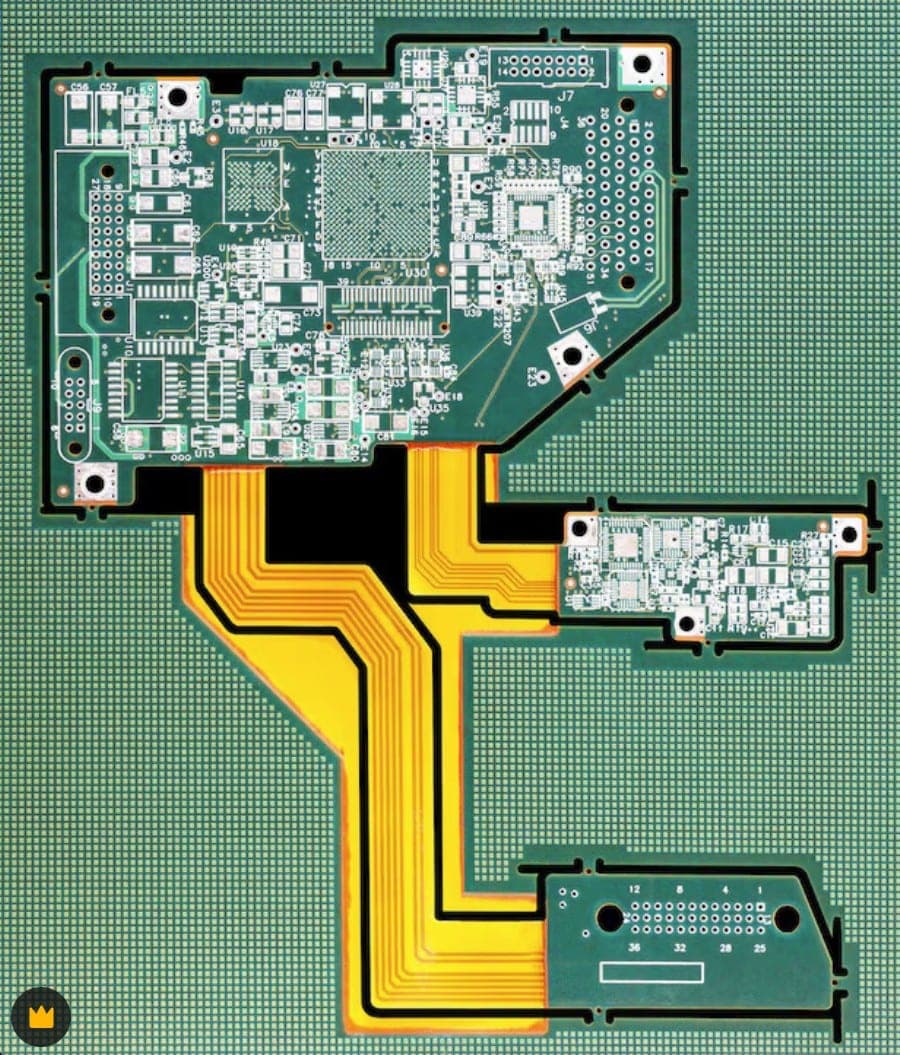
Rigid-Flex PCB
Rigid board sections connected by flexible circuit layers, combined into a single assembly instead of separate boards joined by cables.
Why it matters
Where a product needs to fold, hinge, or fit into a non-flat enclosure, rigid-flex removes the connectors and wiring harnesses that would otherwise be extra failure points.
Typical applications
- Foldable and hinged devices
- Aerospace and defense packaging
- Wearables with articulated sections
- Compact assemblies with tight 3D packaging constraints
Technical considerations
- Bend radius and flex-cycle life need to be planned into the design, not added afterward
- Material selection differs between rigid and flex zones and affects lamination
- Assembly and handling require different fixturing than a flat rigid board
 04 / PRIMARY
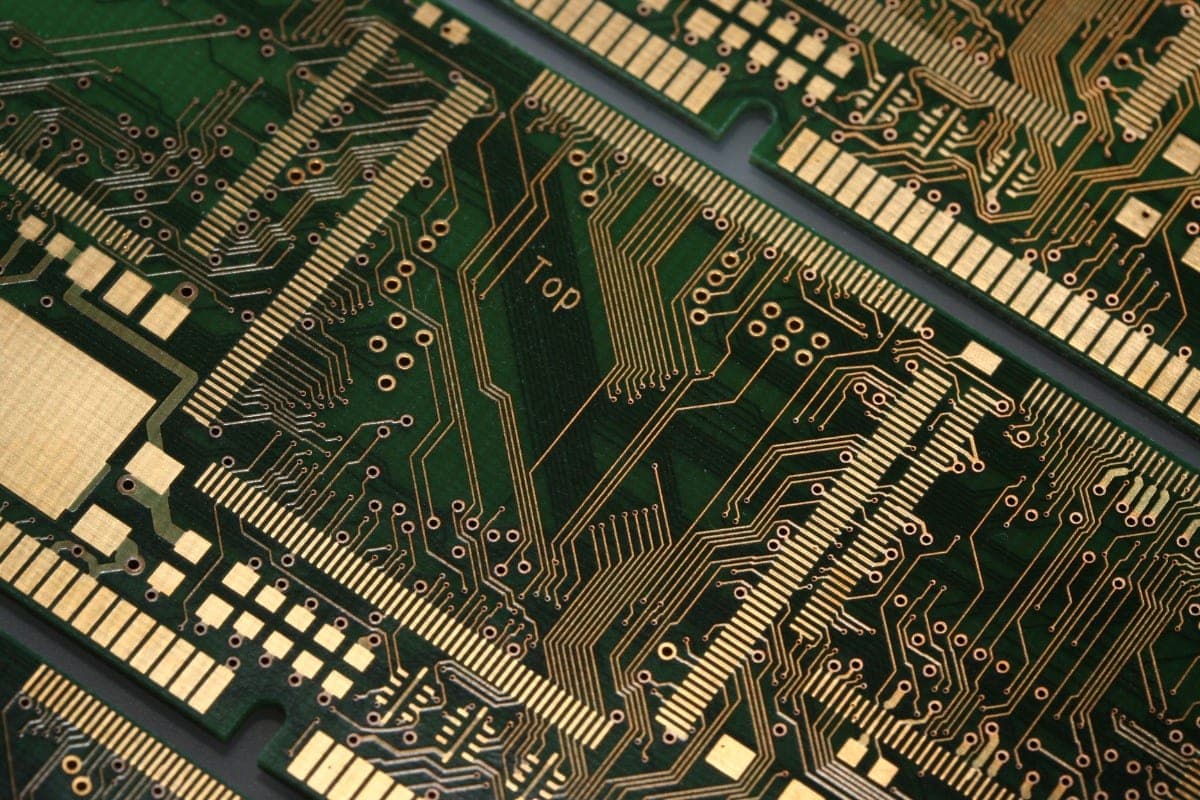
High-Complexity PCB
Advanced builds that combine multiple demanding requirements at once -- high layer counts, fine features, mixed materials, or unusual mechanical constraints.
Why it matters
Some designs don't fit neatly into one category. A board might need HDI routing density, high-frequency performance, and high-Tg thermal stability at the same time.
Typical applications
- Advanced compute and networking hardware
- Aerospace and defense electronics
- Multi-technology sensor and RF modules
- Designs pushing past a single fabrication category
Technical considerations
- Combining technologies compounds process complexity, not just cost
- Design-for-manufacture review matters more here than on any single-technology board
- Engineering collaboration early in the design cycle reduces late-stage surprises
Also Available
The rest of the range
Standard through test-fixture builds -- select a technology to see its detail.
Not sure which technology fits your design?
Send the specification -- engineering will tell you which of the ten fits, and why.