
Products
High-TG PCB
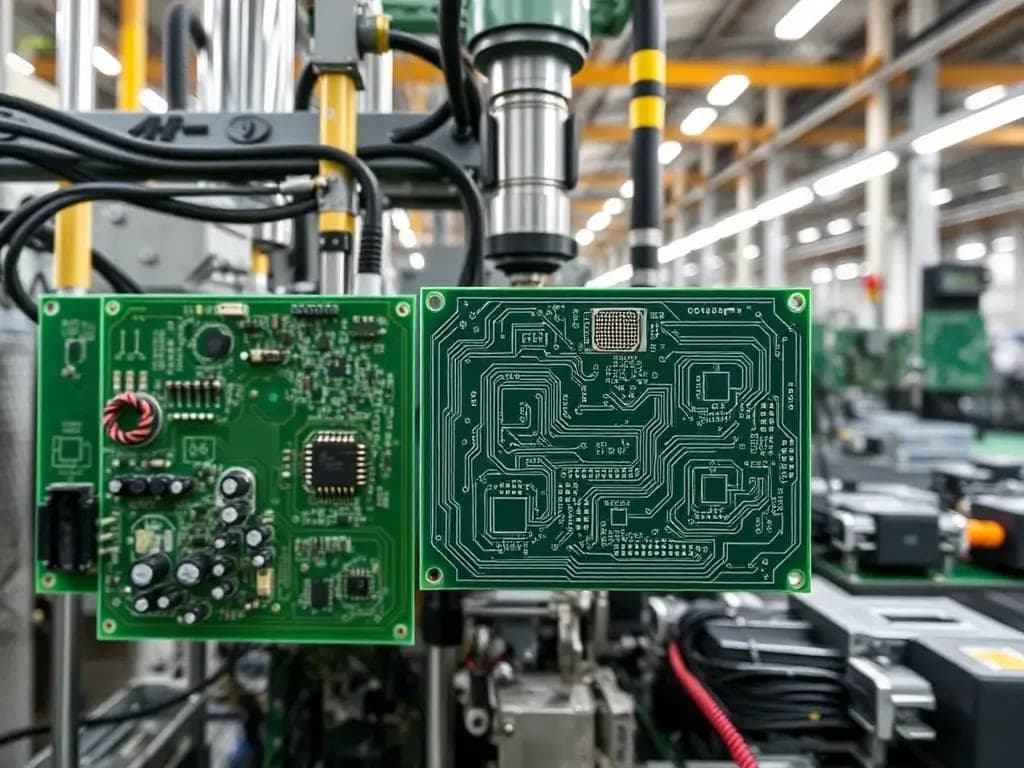
Boards built with high glass-transition-temperature laminate, which stays mechanically stable at higher operating temperatures.
Overview
Boards built with high glass-transition-temperature laminate, which stays mechanically stable at higher operating temperatures.
Why it matters
Standard FR-4 begins to soften at temperatures reachable during lead-free reflow or sustained high-power operation. High-Tg materials hold their mechanical properties further into that range.
Typical Applications
- Power electronics
- Automotive under-hood electronics
- Assemblies with multiple reflow cycles
- Industrial equipment in hot environments
Manufacturing Considerations
- Higher Tg generally trades off against material cost and can affect drill and etch behavior
- Thermal expansion characteristics still need matching to plated-via reliability requirements
- Not automatically necessary for every high-temperature application — worth evaluating against the actual thermal profile
Technical Characteristics
- Max layer count
- 120 layers
- Min trace / space
- 2.2 / 2.2 mil
- Min hole size
- 0.1 mm
- Standard materials
- 370HRS1000-2IT180A (Tg 170–180 °C)
- Surface finish options
- HASL-LFENIGImmersion TinOSPImmersion SilverGold FingerElectroplated Hard GoldENEPIG
- Typical turnaround
- 5–10 working days (samples 5–7)
Exact specifications are confirmed per order — send a spec through Request a Quote for a firm answer. Company-wide process limits are published on the Capabilities page.
Ready to spec a High-TG PCB?
Board type, quantity, layers, material — engineering reviews the full picture.