
Products
Rigid PCB
A fully rigid substrate — the traditional form factor most people picture when they think "circuit board."
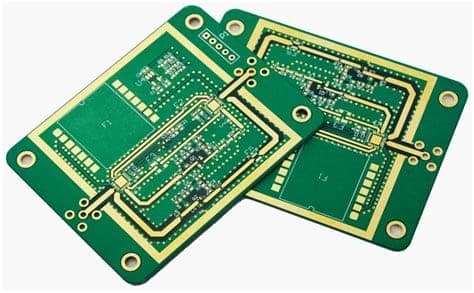
Overview
A fully rigid substrate — the traditional form factor most people picture when they think "circuit board."
Why it matters
For enclosures where the board doesn't need to flex or conform to a shape, rigid construction is simpler to manufacture and mechanically predictable.
Typical Applications
- Standard enclosures and chassis-mounted electronics
- Desktop and rack-mounted equipment
- General-purpose industrial boards
Manufacturing Considerations
- Board thickness affects both stiffness and connector compatibility
- Panelization strategy influences unit cost at volume
- Simpler tooling than flex or rigid-flex construction
Technical Characteristics
- Max layer count
- 120 layers
- Min trace / space
- 2.2 / 2.2 mil
- Min hole size
- 0.1 mm
- Standard materials
- 370HRS1000-2IT180AEM825AP8525RAP8515RLF0100LF0130LF0200
- Surface finish options
- HASL (Hot Air Solder Leveling)ENIG (Electroless Nickel Immersion Gold)Immersion TinOSP (Organic Solderability Preservative)Immersion SilverGold FingerElectroplated Hard GoldSelective OSPENEPIG
- Typical turnaround
- 5–10 working days (samples 5–7)
Exact specifications are confirmed per order — send a spec through Request a Quote for a firm answer. Company-wide process limits are published on the Capabilities page.
Ready to spec a Rigid PCB?
Board type, quantity, layers, material — engineering reviews the full picture.