
Products
ATE PCB
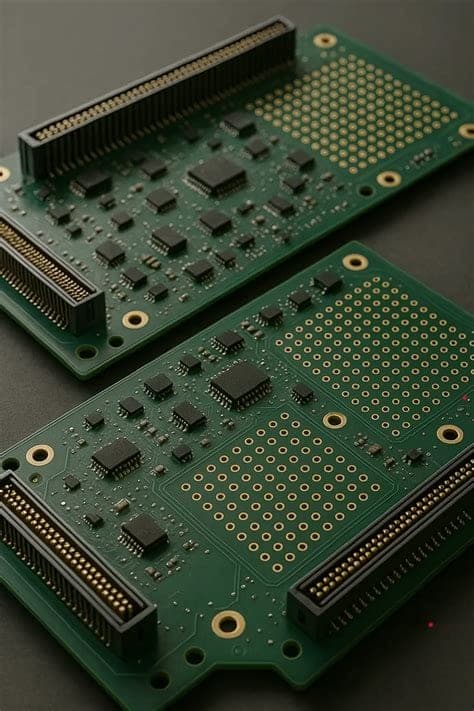
Boards built specifically for automated test equipment — the fixtures and interface boards that test other electronics, not the end product itself.
Overview
Boards built specifically for automated test equipment — the fixtures and interface boards that test other electronics, not the end product itself.
Why it matters
Test boards have different priorities than product boards: they need to survive repeated mechanical cycling and maintain contact reliability over many test cycles, not just function once.
Typical Applications
- Bare-board and in-circuit test fixtures
- Burn-in and functional test interfaces
- Production test equipment
- Device characterization setups
Manufacturing Considerations
- Durability under repeated mechanical contact matters more than for a typical product board
- Pad and via design needs to account for probe wear over the fixture's service life
- Test board revisions need to track the device-under-test's revisions closely
Technical Characteristics
- Max layer count
- 120 layers
- Min trace / space
- 2.2 / 2.2 mil
- Min hole size
- 0.1 mm
- Standard materials
- 370HRS1000-2IT180AEM825
- Surface finish options
- HASL (Hot Air Solder Leveling)ENIG (Electroless Nickel Immersion Gold)Immersion TinOSP (Organic Solderability Preservative)Immersion SilverGold FingerElectroplated Hard GoldSelective OSPENEPIG
- Typical turnaround
- 15+ working days, quoted per design
Exact specifications are confirmed per order — send a spec through Request a Quote for a firm answer. Company-wide process limits are published on the Capabilities page.
Ready to spec an ATE PCB?
Board type, quantity, layers, material — engineering reviews the full picture.